When you apply for a visa or immigration anywhere in the world, your documents must be understood clearly by the reviewing authority. For residents and applicants in the UAE, document translation in Dubai is often a mandatory step before your application is even accepted. Incorrect or incomplete translations can cause delays, rejections, or expensive resubmissions.
This guide explains how official document translation works for immigration and visa purposes, what immigration authorities typically require, and how a specialist firm like Al Rahmaniya Legal Translation in Dubai can help you avoid costly mistakes. For a broader look at how to choose the right legal translation partner beyond immigration use cases, see the complete overview here: Complete overview: “The Complete Guide to Choosing a Legal Translation Company in Dubai for Document Translation and Attestation Services.”
Why Official Document Translation Matters for Visa and Immigration
Most immigration and consular authorities will only accept documents in their official language(s). If your originals are in Arabic, English, or another language, you will often be required to submit a certified translation into the language of the destination country, or into English when dealing with international organizations.
What “Official” Translation Really Means
Official, certified, or legal translation is more than a simple language conversion. It usually includes:
- Translation by approved or licensed translators (e.g., MOJ approved legal translators in the UAE).
- A signed and stamped certificate of accuracy attached to the translated document.
- Format and layout mirroring the original document so nothing appears to be missing or altered.
- Traceability the translation company can be verified or contacted by authorities if they need confirmation.
Common Immigration and Visa Scenarios in Dubai
Dubai residents and applicants typically need official translations in these situations:
- Applying for study visas in Europe, North America, or Australia.
- Submitting family reunion or spouse/child visas.
- Seeking permanent residency or citizenship in another country.
- Processing work permits and skilled migration programs.
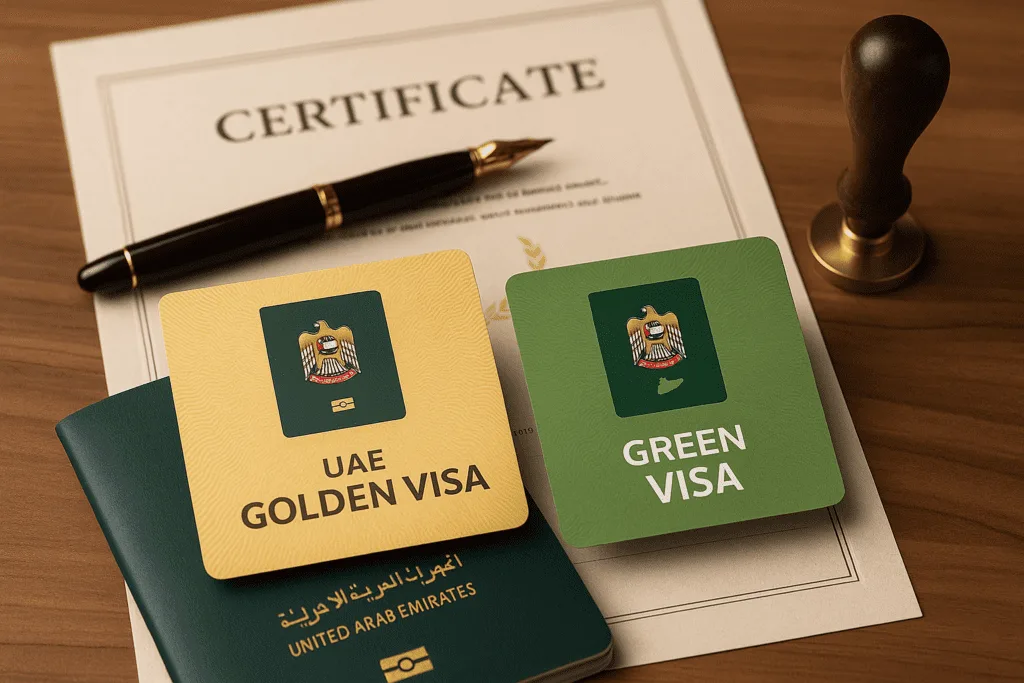
- Applying for Golden Visa or local UAE permits that require foreign documents to be translated into Arabic.
In all these cases, accurate immigration translation in Dubai is critical to present your profile correctly and comply with consular or immigration rules.
Which Documents Usually Need Translation for Visa Applications?
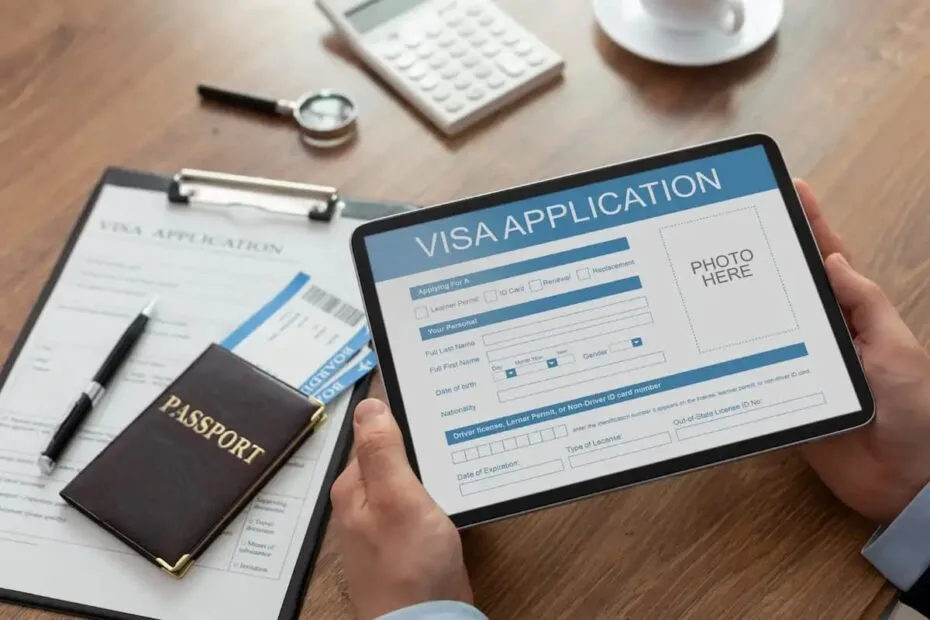
Different embassies and immigration programs have their own checklists. However, the same core document types appear again and again. Planning your visa document translation in Dubai ahead of time helps you submit a complete and consistent application package.
1.) Personal Identity and Civil Status Documents
- Passports and national IDs (name pages and relevant stamps, if requested).
- Birth certificates.
- Marriage certificates and divorce decrees.
- Family registration documents.
- Adoption papers or guardianship documents.
2) Education and Professional Documents
- School certificates and university degrees.
- Transcripts and mark sheets.
- Professional licenses or registration certificates.
- Training certificates or diplomas.
3) Financial and Employment Documents
- Employment contracts and salary certificates.
- Bank statements and financial guarantees.
- Tax assessments or income proofs (for some countries).
4) Legal and Supporting Documents
- Power of attorney related to applications.
- Court judgments or custody orders.
- Police clearance certificates or good conduct certificates.
- Medical reports, if officially required for your visa category.
At Al Rahmaniya Legal Translation, many clients from Deira, Al Barsha, and broader Dubai bring mixed sets of documents in Arabic, English, or other languages and need them consolidated into one consistent, certified package for their chosen destination country.
Key Requirements for Certified Translation for Visa in Dubai
When you submit certified translation for visa in Dubai, immigration bodies are looking for more than linguistic accuracy. They are verifying whether the translation follows their formal requirements.
Typical Consular/Immigration Translation Requirements
- Language requirement: Translation must be into the official language required by the embassy or immigration office (for example, German, French, Italian, Spanish, or English).
- Certification form: A statement by the translator or translation office confirming that the translation is “true, accurate, and complete,” often bearing a signature, stamp, and contact details.
- Licensed translator: Some authorities require MOJ-approved translators or translations done by a sworn or certified translator recognized in the destination country.
- Format: The translation should mirror the structure of the original including seals, stamps, and handwritten text, with clear notes where necessary.
- Completeness: No text should be omitted, even if it appears irrelevant. An official translation must reproduce all textual elements.
How this Applies to Document Translation in Dubai
Professional providers of document translation Dubai services, such as Al Rahmaniya Legal Translation, understand these requirements and are accustomed to preparing files that satisfy both UAE authorities and foreign consulates. This often includes advising you on:
- Whether you need translation into Arabic first for local attestation, then into another language.
- When notarization or embassy attestation is required in addition to translation.
- How to arrange your documents so that everything is logically presented to immigration officials.
Step-by-Step Process: Visa Document Translation in Dubai

To make your application smoother, it helps to follow a structured process for visa document translation in Dubai. The outline below is based on how Al Rahmaniya Legal Translation typically handles immigration-related files.
1. Confirm your Target Country’s Requirements
- Visit the official embassy or immigration website for your destination country.
- Download the latest document checklist for your visa category.
- Note required languages, certification formats, and any specific instructions about translators.
2. Collect and Organize your Original Documents
- Gather original certificates, contracts, and identity documents.
- Check whether they are already in the requested language. If not, list everything that needs translation.
- For multi-page documents, number them clearly to avoid confusion.
3. Consult a Specialist in Immigration Translation in Dubai
Contact a translation company experienced in immigration translation in Dubai, particularly one that is MOJ-approved and familiar with embassy and consular standards. During this consultation, you should:
- Explain your visa type (e.g., student, skilled worker, family reunion).
- Specify target country and preferred timelines.
- Ask whether any documents need attestation in addition to translation.
Al Rahmaniya Legal Translation regularly supports clients in Dubai, Deira, and Al Barsha with this early planning stage, which helps avoid last-minute emergencies.
4. Translation and Quality Assurance
Once your documents are received, a thorough process should follow:
- Translation by a qualified legal translator experienced in immigration terminology.
- Review and proofreading by a second linguist or supervisor.
- Formatting to match the layout of your originals.
- Certification with signature, company stamp, and statement of accuracy.
5. Attestation and Legalization (If Required)
Some immigration processes require attestation of the original documents and/or the translations. This can involve:
- Notary Public attestation in the UAE.
- MOFA (Ministry of Foreign Affairs) attestation.
- Embassy or consular legalization.
Al Rahmaniya Legal Translation also handles document attestation services, guiding you through the necessary steps so your translated documents are accepted abroad.
6. Final Check Before Submission
- Ensure each translated document is attached to its corresponding original.
- Verify that names, dates, and numbers are consistent across all documents.
- Keep digital and physical copies organized by visa category and applicant.
Useful Source:
[1] Visa document translation in Dubai. (n.d.). moj.gov.ae. Retrieved January 19, 2026, from https://www.mofa.gov.ae/en/services/attestation
Choosing a Provider for Document Translation in Dubai for Immigration
Not all translation providers are equally equipped to handle immigration files. When you are selecting a partner for document translation in Dubai, use the criteria below to protect your application and timelines.
Key Selection Criteria
| Criterion | Why It Matters for Immigration | What to Ask the Provider |
|---|---|---|
| MOJ Approval / Legal Status | Ensures translations are recognized by UAE authorities and many consulates. | “Are your legal translators MOJ-approved in the UAE?” |
| Specialization in Visa & Immigration | Reduces risk of errors in specific immigration terminology and format. | “How often do you handle visa and immigration document sets?” |
| Language Coverage | Needed if you are applying to multiple destinations (e.g., Canada, Germany, UK). | “Which languages do you provide certified translations into/from?” |
| Turnaround Time | Helps you meet embassy submission windows and appointment dates. | “What is your standard and urgent delivery time for immigration files?” |
| Confidentiality & Data Security | Protects your sensitive personal and financial data. | “How do you secure client documents and personal information?” |
| Consistency & Quality Control | Ensures names, dates, and terms are consistent across all documents. | “Do you use a second reviewer or QA step for immigration translations?” |
Al Rahmaniya Legal Translation combines MOJ-approved legal translation, specialized immigration experience, and local presence in Dubai to deliver accurate, timely, and confidential services for your visa applications.
Common Mistakes to Avoid in Immigration Translation Dubai
Even when applicants understand the importance of accurate translation, some recurring mistakes can still derail a visa file. Awareness of these pitfalls will help you manage your immigration translation in Dubai more safely.
1. Using Informal or Non Certified Translators
Relying on friends, colleagues, or online tools for official translations is risky. Consular authorities usually reject translations that are not certified or not produced by recognized professionals. This leads to rework and missed deadlines.
2. Inconsistent Spelling of Names and Places
One of the most common issues arises when names are transliterated differently across documents (for example, Mohammed vs. Mohamed). A professional translation office will pay close attention to:
- Name consistency between passport, birth certificate, and other documents.
- Standardized spelling of cities, universities, and institutions.
3. Omitting Stamps, Notes, or Handwritten Content
All textual elements on a document should be rendered in the translation, including:
- Official stamps and seals.
- Handwritten notes or marginal remarks.
- Embassy endorsements or previous visa annotations, if requested.
A line such as “[Stamp: Ministry of Education, UAE]” can be included in the translation to show that a stamp is present on the original.
4. Ignoring Attestation and Legalization Steps
In some immigration programs, the embassy will not accept a certificate unless it has been attested by the relevant UAE authorities first, and only then translated. Coordinating document translation Dubai with attestation helps avoid rejected documents.
5. Last Minute Translation with no Time for Checking
Rushing translation a day before your appointment increases the chance of small inconsistencies sneaking into your file. Planning ahead gives both you and your translation provider time to review everything carefully.
How Al Rahmaniya Legal Translation Supports Immigration and Visa Applicants
Al Rahmaniya Legal Translation Dubai (ARLT) is a specialized legal translation and document services company serving individuals, law firms, corporates, and immigration consultants across Dubai, including key hubs such as Deira and Al Barsha.
MOJ Approved Legal and Certified Translations
ARLT’s team of MOJ approved translators produces legally valid translations that meet the expectations of UAE authorities and international immigration bodies. This is especially important when your documents move between different jurisdictions and need to stand up to scrutiny from multiple agencies.
End-to-End Support: Translation + Attestation
For many immigration cases, translation is only one piece of the process. Al Rahmaniya also offers:
- Guidance on which documents require local or foreign attestation.
- Coordination of document attestation services (where applicable).
- Preparation of translation packages tailored to specific embassy or visa center instructions.
Fast Turnaround with Confidentiality
Immigration timelines can be tight. ARLT is structured to deliver quick but accurate translations, using internal quality checks and secure document handling. Clients can share documents digitally or visit in person from anywhere in Dubai, including Deira and Al Barsha, depending on what is most convenient.
If you are unsure where to start, ARLT can review your planned visa application list and advise you on a translation and attestation roadmap so you submit a complete and consistent file the first time.
Practical Tips to Prepare Your Files for Visa Document Translation Dubai
These practical steps will help you work efficiently with any professional provider of visa document translation Dubai services.
Prepare Clear Scans or Copies
- Use high-resolution scans so that all text, stamps, and seals are legible.
- Avoid shadows, cut-off edges, or overlapping pages.
- For older documents with faded print, provide any additional evidence that can help the translator interpret the content correctly.
Create a Document Checklist
- List each document, its language, and the language required for translation.
- Group documents by applicant (e.g., main applicant, spouse, children).
- Share this checklist with your translation provider to make sure nothing is missed.
Clarify Names and Key Personal Data
Provide your translation company with a reference sheet including:
- Correct spellings of all family members’ names as per passport.
- Preferred transliteration of Arabic names, where relevant.
- Any previous name changes or alternate spellings used in older documents.
Ask for Consistent Terminology Across Your File
Where immigration authorities use specific terms (for example, “residence permit,” “permanent resident,” “skilled worker,” etc.), you can ask your provider to maintain those terms consistently across all translations. This can make your file clearer to case officers reviewing many cases every day.
Frequently Asked Questions about Official Document Translation in Dubai for Immigration
Not always. If your destination country accepts English documents and your originals are in English, additional translation may not be required. However, if some documents are in Arabic or another language, those will usually need certified translation. Always check the specific requirements of the embassy or immigration authority handling your case.
No. A reputable provider of document translation in Dubai will not stamp translations they have not produced or verified themselves. The translator or company certifying the document is legally and professionally responsible for the content. They must therefore perform or closely review the translation.
Timing depends on the number and complexity of documents. Simple sets may be completed within 1 to 2 working days, while larger or more complex files may need a bit longer, especially if additional proofreading and attestation are required. Al Rahmaniya Legal Translation offers standard and urgent options depending on your deadlines.
No translation provider can guarantee acceptance in every scenario because visa decisions depend on many factors beyond translation. However, working with a MOJ-approved, experienced provider like Al Rahmaniya Legal Translation significantly increases the likelihood that your translations meet the formal standards required by most embassies and immigration offices.
Some immigration programs require notarization or consular legalization of translations, while others accept a certified translation on company letterhead and stamp. The requirement varies by country and visa type. Your translation provider should help you interpret the rules and, where needed, arrange the appropriate attestation steps.
Conclusion: Secure Your Immigration Journey with Professional Document Translation in Dubai
Immigration and visa applications are high stakes processes where small mistakes can have serious consequences. Professional, certified document translation in Dubai ensures your personal, academic, financial, and legal information is accurately and clearly presented to foreign authorities.
By choosing a trusted partner like Al Rahmaniya Legal Translation, you benefit from MOJ approved legal translation, deep experience with visa and immigration files, and end-to-end support from translation through to attestation. Whether you are in central Dubai, Deira, or Al Barsha, ARLT can help you prepare a complete and compliant document package for your target country.
For a broader framework on evaluating and selecting translation providers for all types of legal, corporate, and personal documentation, explore the main guide here: Complete overview: “The Complete Guide to Choosing a Legal Translation Company in Dubai for Document Translation and Attestation Services.”
If you are planning a visa or immigration application, consider speaking with Al Rahmaniya Legal Translation early in your process to map out your translation and attestation needs well before your submission date.